
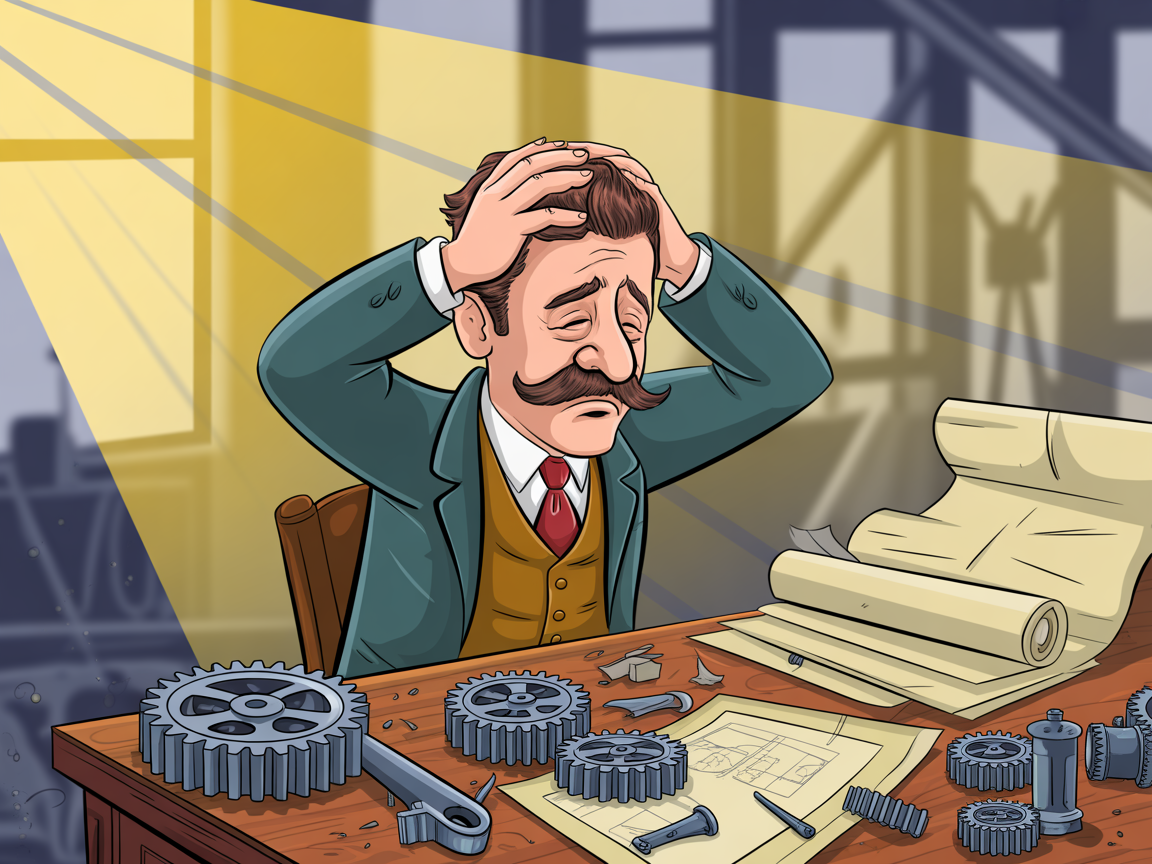
5 Wrong Beliefs & Traps That Kill Factory Systems (Before You Even Start)
What you believe about systems is what stops your systems from working.
Last week, we talked about why factory systems fail. You saw the patterns. You recognized the problems. Maybe you nodded when we talked about the gap between what is written and what actually happens.
But here is the deeper truth: The real problem starts before you even build your system.
It starts with what you believe about systems.
🎥 Prefer listening? Watch the Tamil version of this post here:
The Beliefs That Break Everything
Most Tamil Nadu factory owners carry invisible beliefs about systems. Beliefs that feel smart. Beliefs that sound right. Beliefs that everybody else follows.
But these beliefs quietly kill every system you try to build.
Let me show you the most dangerous ones.
Myth #1: Get the Certificate, Get the System
You work hard to get ISO/IATF certification. You spend months preparing. You train people. You pass the audit. You hang the certificate on the wall.
You feel proud. You think your system is complete.
But three months later, things go back to the old way. People stop following procedures. Problems return. You wonder what went wrong.
The truth: In most cases certificate is just paper. It proves you can pass an audit. It does not prove your system works.
Real systems work when auditors are not there. Real systems help you solve daily problems. Real systems make work easier, not harder.
Getting certified is like getting a driver’s license. The license does not make you a good driver. Daily practice makes you a good driver.
Myth #2: Write It Once, Use It Forever
You spend weeks writing perfect procedures each step is detailed, covered each and every situation, then you print them laminate them you even train everyone on the new procedures.
You feel accomplished. The work is done.
But business changes. New customers come. New products start. New machines arrive. New people join.
Your procedures stay the same. Slowly, they become useless. People ignore them because they do not match reality.
The truth: Systems must grow with your business. What worked for 15 people does not work for 40 people. What worked for 2 products does not work for 6 products.
Living systems change. Dead systems stay the same.
Myth #3: Complex Systems Show Expertise
You want to look professional, so you create detailed flowcharts, multiple signatures, long checklists and complex forms, then you think complexity shows quality and adding more steps mean better control.
But your workers get confused so people skip steps, make mistakes and avoid using the system completely.
The truth: Simple systems get followed, complex systems get avoided.
Your workers are busy.
They face pressure.
They have deadlines.
If your system is hard to use, they will find ways to skip it.
Make systems simple enough that anyone can follow them when they are tired and stressed.
Myth #4: Copy What Works Elsewhere
You visit another factory. Their 5S board looks amazing—clear colors, structured updates, a team doing daily huddles around it. You feel inspired.
You copy exactly what they do, same boards, colors and meeting format.
But it does not work in your factory because people do not use it then eventually it becomes decoration.
The truth: Tools work only when they solve your specific problems.
That factory’s 5S board solved their specific confusion. Your confusion might be different. Their color codes matched their workflow. Your workflow might be different.
Copy the thinking, not the tools.
Myth #5: Software Solves Everything
You see factories with digital dashboards. Real-time tracking. Automatic alerts. Everything looks modern and efficient.
You buy similar software. You set up the system. You train people to use it.
For the first week, you feel powerful. You can see everything on your computer.
Then reality hits. The software shows perfect data. But the floor is chaotic. People still coordinate through WhatsApp. Problems still get solved outside the system.
The truth: Software speeds up your current process. If your current process is broken, software makes it break faster.
Fix your process first. Then add software to make it faster.
The Traps That Catch Tamil Nadu Manufacturers
Beyond these myths, there are specific traps that catch small manufacturers. Traps that look like good ideas but create bigger problems.
Trap #1: Procedure Shopping
You buy ready-made procedures from consultants. Or you download templates from the internet. Or you copy procedures from other companies.
You think this saves time. You think experts know better than you.
But these procedures do not match your reality. They use different machines. Different materials. Different customer requirements.
Your workers cannot follow them. So they create their own shortcuts. Your official procedures become fiction.
The escape: Build procedures with your people. Use their experience. Solve their daily problems. Make procedures that actually help them work better.
Trap #2: Audit Theater
You create systems to pass audits, not to run your business. You focus on what auditors want to see, not what workers need to use.
You have beautiful documents. Perfect flowcharts. Clean boards. Everything looks impressive.
But none of it helps daily work. None of it solves real problems. People follow it only when auditors visit.
The escape: Build systems for your business first. Make audits a side benefit, not the main goal.
Trap #3: The Hero Dependency
You depend on smart people to handle problems. Ravi knows all the shortcuts. Priya handles all customer complaints. Your senior operator fixes all machine issues.
You think this is efficiency. You think smart people are your strength.
But these heroes hide that your system is broken. When they are not there, chaos returns. When they leave, knowledge leaves with them.
The escape: Build systems that work without heroes. Capture their knowledge. Train others. Make your business depend on processes, not personalities.
Trap #4: The Perfection Trap
You want perfect systems. Zero defects. Zero complaints. Zero problems.
So you add more checks. More approvals. More controls. You try to prevent every possible mistake.
But your system becomes slow. People get frustrated. They find ways to bypass controls to meet deadlines.
The escape: Build systems that catch problems early, not systems that prevent all problems. Focus on quick detection and fast response.
Trap #5: The Technology First Trap
You think technology will solve your management problems. You buy ERP systems. IoT sensors. Digital dashboards.
You spend money on tools before understanding your processes. You digitize confusion instead of solving it.
The escape: Understand your process first. Make it work manually. Then add technology to make it work faster.
The Connection You Miss (Again)
Here is what makes these myths and traps dangerous: Everything connects to everything else.
When you fall into one trap, you usually fall into several traps. When you believe one myth, you usually believe several myths, and all these myths and traps point to the same missing piece: You think about systems as separate parts instead of connected wholes.
- You think about quality separately from delivery.
- You think about production separately from maintenance.
- You think about training separately from procedures.
But in reality, everything affects everything else.
This is like when you give your vehicle to a mechanic for service. Even-though he is experienced but without a diagnostic system, he starts changing parts based on his experience. He does not troubleshoot properly.
He might fix one thing but break three other things. He focuses on the part he sees. He misses how that part connects to the whole engine.
What if he had a system for troubleshooting? He would follow steps. He would find the real cause. He would change only what needed changing.
This is what most businesses do. They focus on tactical short-term actions. They miss long-term impacts. They fix one department but break the connection between departments.
The fundamental truth: This is the fundamental principle – “as above, so below, so below as above.” Everything in this world connects in some way.
When you fix one thing right, many things get better. When you fix one thing wrong, many things break.
Your business is one connected system. Your management system must reflect those connections.
What Actually Works
Stop thinking about systems as documents or software or procedures. Start thinking about systems as ways to help people see problems early and solve them fast.
Real systems do three things:
- They make problems visible when they are small
- They help people make good decisions under pressure
- They get better every time something goes wrong
Here is how to build systems that actually work:
Research shows: Systems that work focus on “learning loops, not rigid rules.” They adapt and grow.
Here is how to avoid the traps:
- Think Whole, Not Parts: Before you fix anything, understand how it connects to everything else. Map the connections. Ask: “If I change this, what else changes?”
- Start Simple, Grow Smart: Do not try to build perfect systems on day one. Start with simple systems that solve real problems. Improve them as you learn.
- Build With People, Not For People: The people doing the work know things you do not know. Ask them: “What confuses you? What would make work easier?”
- Focus on Root Causes, Not Symptoms: When problems happen, ask “why” five times. Find the real cause. Fix that, not just what you see.
- Make Learning, Not Rules: Every problem teaches you something. Use that learning to make your system smarter.
The Real Cost of Wrong Beliefs:
When you build systems on wrong beliefs, you waste more than time and money.
You waste trust. Your people stop believing that systems can help them. They start seeing systems as obstacles instead of tools.
You waste energy. You keep building systems that break. You keep fixing the same problems over and over. You waste growth. You stay stuck managing daily fires instead of building for the future.
Your Reality Check
Look at your current systems. Ask yourself:
- Did I build this to pass audits or to solve real problems?
- Do my people use this when nobody is watching?
- Does this help daily work or create more work?
- When did I last update this system?
- Do I understand how this connects to other parts of my business?
If you do not like your answers, you are ready to build systems that actually work.
Everything Connects
Remember: Your business is like an engine. Every part affects every other part.
When you understand the connections, you can fix the real problems with the right solutions. When you ignore the connections, you fix one thing and break three things.
As above, so below. So below, as above. This is the fundamental principle of everything.
Change your beliefs. Change your systems. Change your results.
Everything is connected. Your systems must reflect these connections.
Next week: How to build systems that your team actually wants to use (instead of systems they try to avoid)
Comments are closed.