
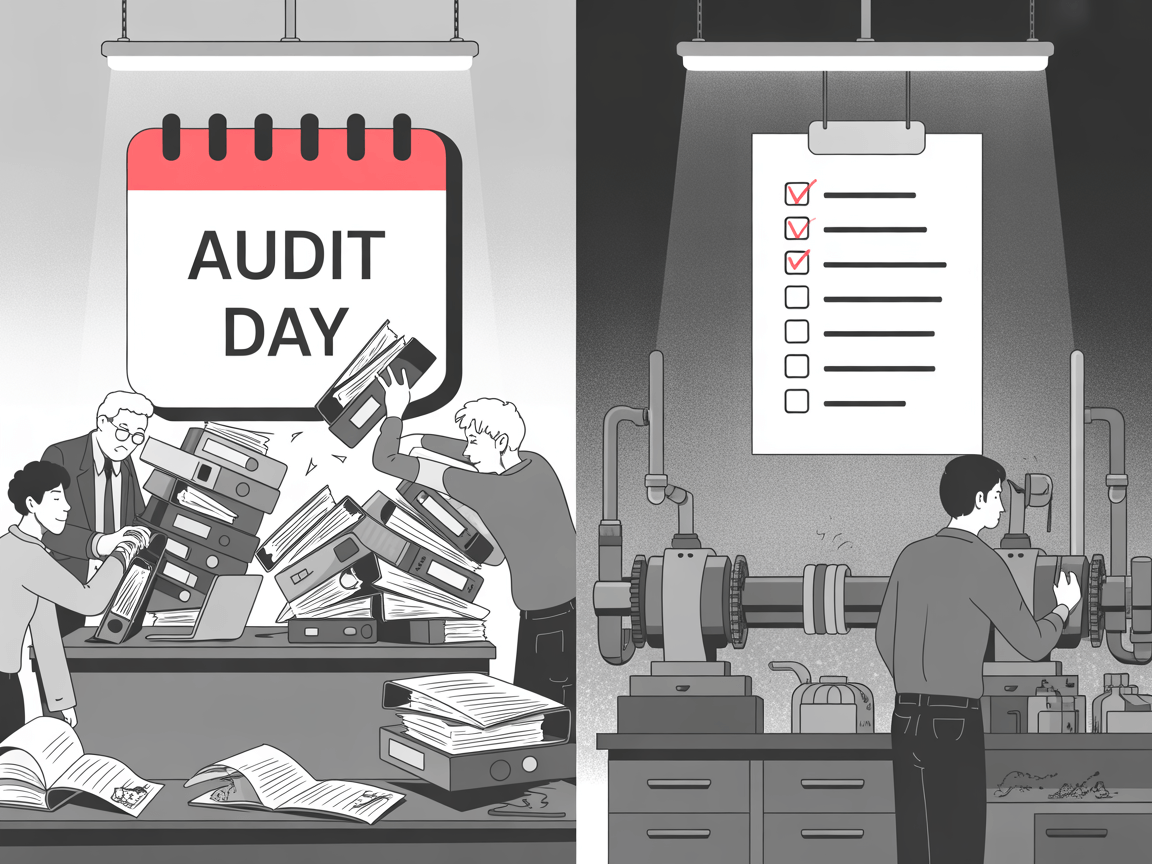
Audit Survival vs. Real Quality: A Tale of Two MSMEs
ISO audit survival vs real quality is more than a catchy phrase, it’s a daily reality for MSMEs in Tamil Nadu.
It’s a Tuesday morning in Tamil Nadu. Two MSME owners are preparing for their ISO surveillance audits. On paper, their stories look the same — both run small factories, both have ISO 9001 certificates framed near the office door, both want to keep customers happy and avoid trouble.
But if you step inside, the difference is night and day.
Company A: Life in Audit Survival Mode
In Company A, the scene is almost theatrical. For the past two weeks, files have been pulled out of dusty cupboards, forms backdated, and employees “coached” on what to say if the auditor asks questions. Everyone knows this drill. The boss has spent good money on a consultant who assures him: “Don’t worry, I’ll handle the audit.”
This is classic audit survival mode — where passing the inspection matters more than running a real system. Stress is high, tempers flare, and the only goal is simple: survive the audit.
For Company A, every ISO 9001 check feels like an exam they forgot to study for. Supervisors chase signatures. Operators fill out old log sheets with yesterday’s dates. Managers scramble to prepare answers. None of this happens during the year — only when the auditor comes.
The truth is simple: their ISO certificate lives in a frame, not on the shop floor. Instead of a system, they have a consultant-made manual. Nobody believes in it, nobody uses it — except during audit week.
And the auditors can usually tell. At first, the company managed to scrape through MSME audits with rehearsed answers and polished files. But eventually, the cracks showed. One year, the auditor checked their corrective actions. Six months of unresolved issues were sitting untouched.
The result? A textbook case of surveillance audit failure. The certificate was suspended. Overnight, the business that once boasted “ISO certified” on its brochure was making urgent calls to consultants, trying to save face.
This is what happens when ISO turns into certificate-only compliance — the same trap we explored in detail in Why paperwork-only ISO fails MSMEs
Company B: The Power of Daily Clarity
Now step into Company B, just a few kilometers away.
Here, audit day looks like any other Tuesday. No backdated forms. No frantic rehearsals. No nervous staff. The difference isn’t luck — it’s culture. Their ISO system isn’t a pile of forms; it’s the way they actually run the shop floor.
Supervisors use the same checklists daily, not because the auditor will ask for them, but because they make their work easier. Operators record inspections in real time because it helps them catch problems before they escalate. Internal audits happen routinely, and instead of being staged, they’re treated as a chance to learn.
So when the auditor arrives, nothing needs to be hidden or polished. The evidence is already there, woven into the company’s daily rhythm.
This is what real ISO implementation looks like. It’s not paperwork for show; it’s a tool that brings daily clarity.
It’s also why programs like ZED certification in Tamil Nadu are gaining traction. They recognize MSMEs that treat ISO as a living system. For Company B, this mindset means fewer defects, stronger credibility, and customer trust that lasts.
Audit survival fades away. What remains is a system that works every day.
ISO Audit Survival vs Real Quality: Performance vs. Practice
Put simply, Company A lives in audit survival mode, while Company B thrives through real ISO implementation. Both have the same certificate, but the outcomes could not be more different.
- Company A treats ISO as a yearly performance. Files come alive only during the audit, and employees play along because they must. The result? Stress, wasted consultant fees, surveillance audit failures, and zero improvement.
- Company B treats ISO as practice. Their system is lean, customized, and embedded in daily routines. Internal audits reveal problems early, improvements stick, and customers notice the difference. The result? Stability, credibility, and growth — with no annual drama.
This is the hard truth: passing an ISO audit is not the same as running a system. Certificates can be bought. Processes cannot. One MSME buys a plaque for the wall. The other builds clarity for the shop floor.
And as we saw in The hidden costs of certificate-only ISO, this kind of audit survival mode not only creates stress but also drains money and morale.
Closing Reflection
So here’s the choice every MSME faces: do you want to live in audit survival mode, or do you want a system that delivers real ISO quality every single day?
One path turns ISO into an annual drama — dusting files, rehearsing answers, and hoping auditors don’t dig too deep. The other path makes ISO invisible, because it’s simply how the business works. Machines run smoother, people are less stressed, and customers trust what you deliver.
This isn’t theory. Tamil Nadu MSMEs that embraced ZED certification programs have seen fewer defects, less firefighting, and stronger market credibility. Meanwhile, those stuck in certificate-only thinking face suspended certificates, frustrated teams, and missed opportunities.
The difference is mindset. Passing an audit may keep a certificate on the wall, but daily clarity is what keeps the business alive.
Which company do you want to be — the one that performs once a year, or the one that improves every day?
Next week, we’ll look at another hidden trap MSMEs fall into: the world of copy-paste manuals and zombie documents. Because if your ISO manual looks like it could belong to any company, it probably doesn’t belong to yours.