
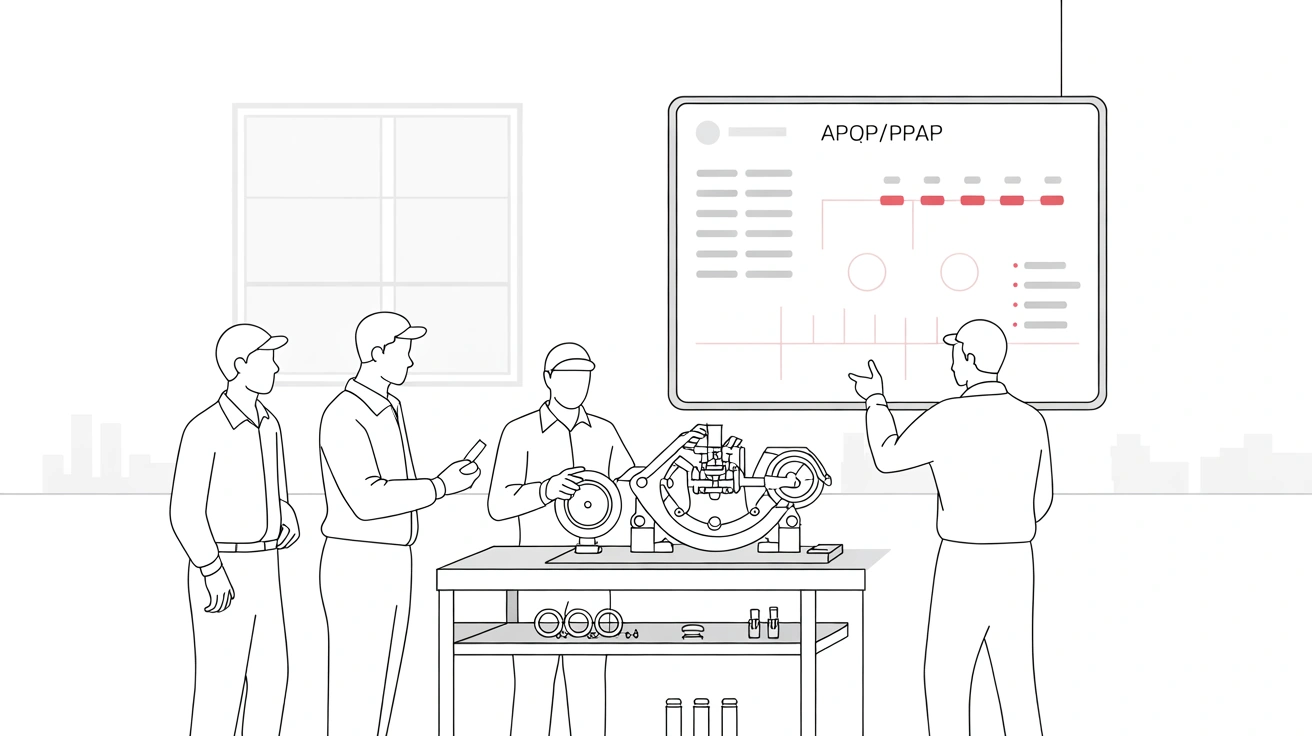
In my experience, nothing puts pressure on manufacturing MSMEs like supplying to the automotive industry. Customers expect flawless parts, delivered on time, every time. One defective batch can stop a production line, trigger penalties, or even cost you the contract.
Yet, I’ve seen suppliers proudly show me their IATF 16949 certificate, while the reality on the shop floor tells a different story. Quality checks are skipped under delivery pressure, process changes aren’t documented, and customer complaints get handled reactively instead of being prevented.
What is IATF 16949?
IATF 16949 is the international quality management system standard designed specifically for the automotive industry.
In simple words: IATF 16949 helps suppliers build processes that prevent defects, meet customer-specific requirements, and keep the supply chain running without interruptions.
It builds on ISO 9001, but adds stricter requirements for:
- Advanced Product Quality Planning (APQP).
- Production Part Approval Process (PPAP).
- Failure Mode and Effects Analysis (FMEA).
- Control plans, traceability, and customer-specific requirements (CSRs).
Think of it as the automotive industry’s trust badge. Without it, you may not even be able to enter the supply chain. With it, you prove you can deliver safe, reliable, and consistent parts every time.
What’s in It for MSMEs to Care About IATF 16949?
For MSMEs, IATF 16949 can feel overwhelming, but here’s why it matters:
- Customer Access – Most OEMs and Tier-1s require IATF 16949 certification to even consider you as a supplier.
- Zero Defect Expectation – Automotive doesn’t forgive mistakes. One failure can mean recalls, penalties, or losing your contract.
- Stronger Processes – Beyond the certificate, IATF forces you to build systems that reduce variation, improve traceability, and prevent defects.
To put it simply: IATF 16949 isn’t just another quality standard, it’s the entry ticket to automotive supply chains.
Big Misunderstanding: The Burden of Paperwork
Many MSMEs fear IATF 16949 because they think it means endless forms and thick manuals, and yes, if poorly implemented, it becomes exactly that.
But the real intent of IATF isn’t to drown you in paperwork, it’s to make sure your processes are so robust that defects don’t escape to customers. The core tools (APQP, PPAP, FMEA, MSA, SPC and Control Plan) aren’t paperwork. They’re guardrails that protect both your business and your customer.
The mistake I’ve seen is when companies prepare documents just to show auditors, while actual process control on the shop floor is missing. That creates a false sense of compliance, and sooner or later, the customer discovers the truth.
What IATF 16949 Really Brings to a Factory
When implemented as a living system, IATF 16949 brings:
- Defect Prevention – Risks are identified upfront (FMEA), controls are applied, and processes are monitored.
- Traceability & Discipline – Every part and process step can be tracked, so problems are caught early.
- Customer Confidence – OEMs trust you because they know your system is designed to deliver consistent, safe, and reliable parts.
Imagine a sheet-metal supplier making brackets for a Tier-1. Without IATF 16949, inspection is ad-hoc, and a batch of defective brackets slips through, stopping the OEM’s assembly line. The penalty wipes out profits. With IATF 16949, the supplier had a control plan in place, caught the defect at the in-process stage, and fixed it before shipment. Delivery was on time, and trust with the OEM remained intact.
That’s IATF 16949 in action, robust processes that prevent problems instead of just reacting to them.
My Perspective
IATF 16949 often gets blamed for being too strict or too heavy for MSMEs. But the truth is, automotive supply chains demand reliability. One mistake from a small supplier can cause losses in crores at an OEM’s plant. That’s why the standard exists, not to create paperwork, but to ensure trust.
Suppliers who leverage IATF 16949 as a competitive advantage boost customer confidence through their systems, winning more contracts while others struggle. On the other hand, suppliers lose contracts because they treat IATF as just paperwork.
Ask yourself – if your IATF 16949 certificate vanished tomorrow, would your processes still prevent defects, ensure traceability, and keep customers confident? If yes, you have a system. If not, you only had paperwork.
For MSMEs, IATF 16949 is not just about surviving audits. It’s about proving to your customers that you are trustworthy in an industry where trust is everything.
If you’re not sure where to start, begin with one simple step: map your critical process and ask, “Where can defects escape?” That’s the first IATF mindset.
Closing
So, what is IATF 16949? It’s not a bunch of documents. It’s a system that helps you prevent defects, meet customer requirements, and stay in the automotive supply chain.