
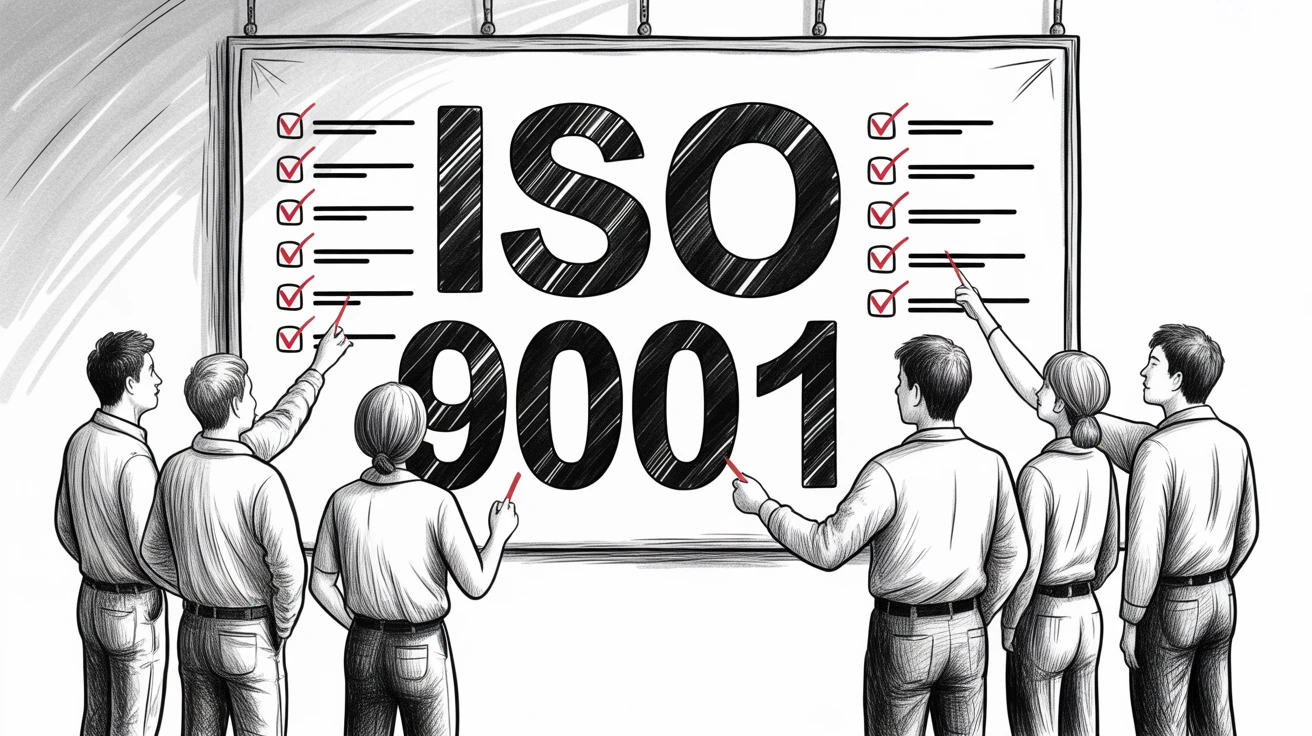
I’ve seen many factories where the ISO 9001 certificate is proudly framed on the wall. The manuals are neatly filed, and the auditor has signed off. On paper, everything looks perfect.
But on the shop floor? Chaos. Parts are being reworked because the requirements weren’t clear. Workers arguing about who was supposed to check what. The owner firefighting while also calming down angry customers.
This is what many people miss: ISO 9001 is not paperwork, it’s supposed to stop this exact chaos.
So, what is ISO 9001 really about? Let’s clear away the jargon and explain it in simple words.
What is ISO 9001?
ISO 9001 is the world’s most widely used quality management system (QMS) standard.
That sounds heavy, but here’s the simple version: ISO 9001 is a framework that helps you consistently deliver what you promised to customers.
It doesn’t matter whether you’re a 15-person sheet metal shop or a global car manufacturer. The principle remains the same.
- Define your processes clearly.
- Make sure people follow them.
- Check results and fix mistakes so they don’t repeat.
Think of it as the backbone of your business operations. Without it, every order depends on memory, luck, or the owner’s constant supervision.
Why Should MSME Businesses Care About ISO 9001?
For many MSMEs, quality feels like a vague word. But here’s why ISO 9001 matters for small businesses:
- Customers trust it – Bigger buyers often won’t even consider you without ISO 9001.
- Fewer mistakes, less rework – Clear processes mean less confusion, fewer errors, and lower costs.
- Structured growth – Many MSMEs stay stuck because the owner controls everything. ISO 9001 builds systems so the business can grow beyond one person.
To put it simply: ISO 9001 isn’t about passing an audit, it’s about making daily work smoother.
The Big Misunderstanding: ISO 9001 = Paperwork
Most MSMEs end up treating ISO 9001 like a certificate because that’s often what consultants sell them. They bring ready-made manuals, fill folders with SOPs, and prepare everyone for audit day.
On that day, the owner tells the team: “Keep the files ready. Answer politely. Once the audit is done, relax.”
This approach earns a certificate, but it doesn’t build clarity. It doesn’t stop the next customer complaint.
The truth is simple: a certificate doesn’t run your factory. Your system does.
What ISO 9001 Really Brings to a Factory
If you peel back the paperwork, ISO 9001 brings three powerful things:
- Clarity of Processes – Everyone knows who is responsible for what, when, and how. No guesswork.
- Problem-Solving Discipline – Complaints and rejections don’t just get patched; they get logged, reviewed, and fixed at the root.
- Consistency for Customers – A customer who gets the right part today will expect the same tomorrow. ISO 9001 makes that expectation possible.
Example: Instead of tracking complaints in memory or WhatsApp chats, you keep a simple log. After three months, you see that most complaints come from one operation. Fix that, and suddenly your complaints drop.
That’s ISO 9001 in action. Not fancy reports, just clarity and repeatability.
My Perspective
I’ve worked in factories where ISO 9001 files looked perfect, but operators didn’t even know they existed. That isn’t genuine ISO 9001, that’s paperwork theatre.
But I’ve also seen MSMEs treat ISO 9001 as a living system. The difference is visible:
- The owner doesn’t chase every issue.
- Workers know what to do without constant supervision.
- Customers trust the business because they see consistency.
So here’s my honest test: if your ISO 9001 certificate disappeared tomorrow and nothing in your operations changed, you never had ISO 9001. You only had paperwork.
Closing
So, what is ISO 9001? It’s not a certificate. It’s not a file. It’s a system of clarity that reduces firefighting and builds trust with customers.
If you’re struggling with firefighting in your factory, start small. Map just one process clearly. That’s your first real ISO 9001 step.