
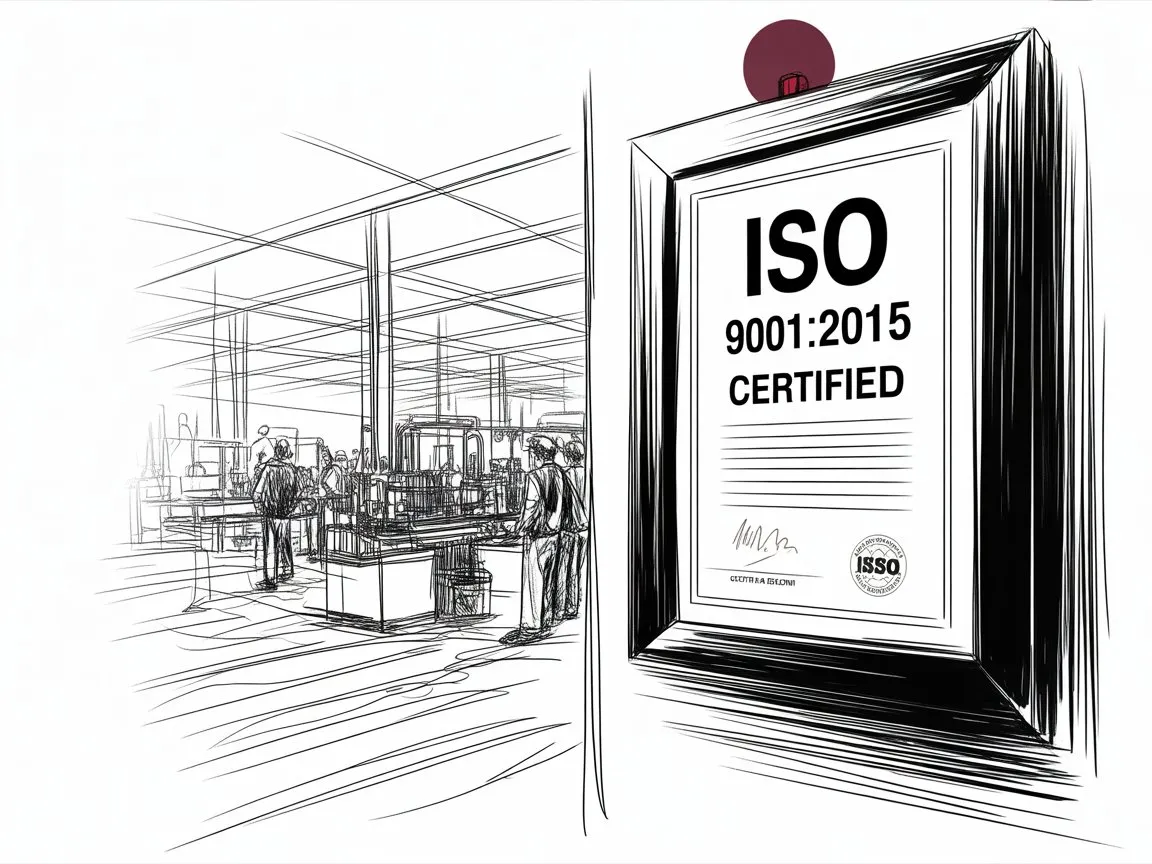
Walk into almost any certified plant and you'll see the same thing near reception: the IATF 16949 certificate, framed, fresh, official. The message is clear: we are a certified supplier.
Now take a walk to the shop floor.
A machine is idle because preventive maintenance was skipped last week. A supervisor is arranging emergency sorting because the customer flagged a defect. Dispatch is delayed because nobody noticed the shortage until this morning.
It doesn't take long before the contradiction hits you. If the certificate really brings discipline and control, why does the plant still run on firefighting?
So the real question is not "Are you certified?"
The real question is: "Does your system actually work?"
You already have a system. Did you design it?
Every plant runs on a system, whether anyone calls it that or not.
Your real system isn't what's written in the quality manual. It's how things actually get done:
- What happens when a machine breaks down in the middle of the night shift
- How decisions get made when the quality head is at a customer audit
- What happens when the one inspector who "knows the part" is on leave
If the answer is memory, urgent phone calls and a few people who hold everything together, your system is fragile. It's invisible. And that invisibility is where the daily firefighting comes from.
Most plants didn't consciously design that system. It formed by accident, out of urgency and last-minute decisions. The documents were written separately, for the auditor. Over time, the two drifted apart.
The badge without the system
Here's how it often happens.
The customer says: "Get IATF 16949 if you want to keep this business." A consultant is called. Ready-made manuals arrive with the company's name edited in. Procedures are written in a back office. The team is coached for the audit. The certificate arrives. Everyone celebrates.
And then life goes back to normal. Operators take the same shortcuts. Supervisors use their own checklists. Corrective actions close on paper. Nobody opens the manual unless an audit is coming.
It's not that the people in these plants don't care about quality. They do. But the way the system was built reduced it to a badge instead of a system.
That's the illusion: the feeling of safety, without the reality of control.
What a certificate-only system really costs
The visible costs are on the invoice: consultant fees, certification body charges, the hours spent preparing for audits.
The costs that hurt are the ones nobody invoices.
Engineers' time. Hours spent filling forms to satisfy an auditor, not to solve a problem. Time taken away from the line.
Credibility on the floor. Operators and supervisors see through it quickly. If the system is a show for outsiders, they stop taking it seriously. Once people stop believing in the system, no procedure can save it.
Missed improvement. Scrap that could have come down. Breakdowns that could have been prevented. A repeat complaint that could have been stopped the first time. None of it happens, because the "system" lives in folders.
Customer trust. A certificate doesn't stop a rejected lot. It doesn't stop the customer's supplier quality engineer from raising your risk rating. Trust takes years to build and one escape to lose.
The emergency fix. This one hurts the most. A surveillance audit or a customer audit arrives, the findings pile up, and suddenly it's panic: consultants again, weekend work, money spent fixing what was never really built. I've seen plants spend more on these emergency fixes than on the original certification.
It's like buying the cheapest helmet. It looks fine and saves a little money, but the real cost shows up only in the crash. In a plant, the crash doesn't look dramatic. It looks like rework quietly eating margins, a customer moving the next programme elsewhere, and a team so tired of firefighting that they stop believing improvement is possible.
What a working IATF system looks like
IATF 16949 was never meant to be a certificate factory. At its core, it's a framework for clarity: know your processes, control the risks, catch problems early, and learn from every one.
A working system is not about thicker manuals. It's about daily discipline:
- Control plans that match what operators actually check
- Records that help spot patterns, not piles of paper for the file
- Corrective actions that change the process, not just the document
- Management reviews that lead to decisions, not just minutes
The difference is easy to see. In plants where the system is alive, operators can explain why they do a check. Engineers use the data to prevent problems, not just record them. Customers feel it in consistent deliveries. And audit week looks like any other week.
A quick test
Next time you walk past that framed certificate, pause for a second and ask:
- If this certificate disappeared tomorrow, would anything on the floor change?
- Do people follow the system when nobody is watching, or only in audit week?
- When did we last change a procedure because the floor taught us something, not because an auditor asked?
If the answers make you uncomfortable, that's useful. It means you can now see the gap between paper and floor. And a gap you can see is a gap you can close.
You don't need to rebuild everything. Pick one process that keeps hurting you. Walk it with the documents in your hand. Note where paper and floor don't match. That's where real work starts.