
It's a Tuesday morning. Two Tier-2 suppliers are preparing for their IATF 16949 surveillance audits.
On paper, their stories look the same. Similar size, similar parts, both certified, both supplying the same Tier-1. Both want to keep the customer happy and avoid trouble.
But step inside, and the difference is night and day.
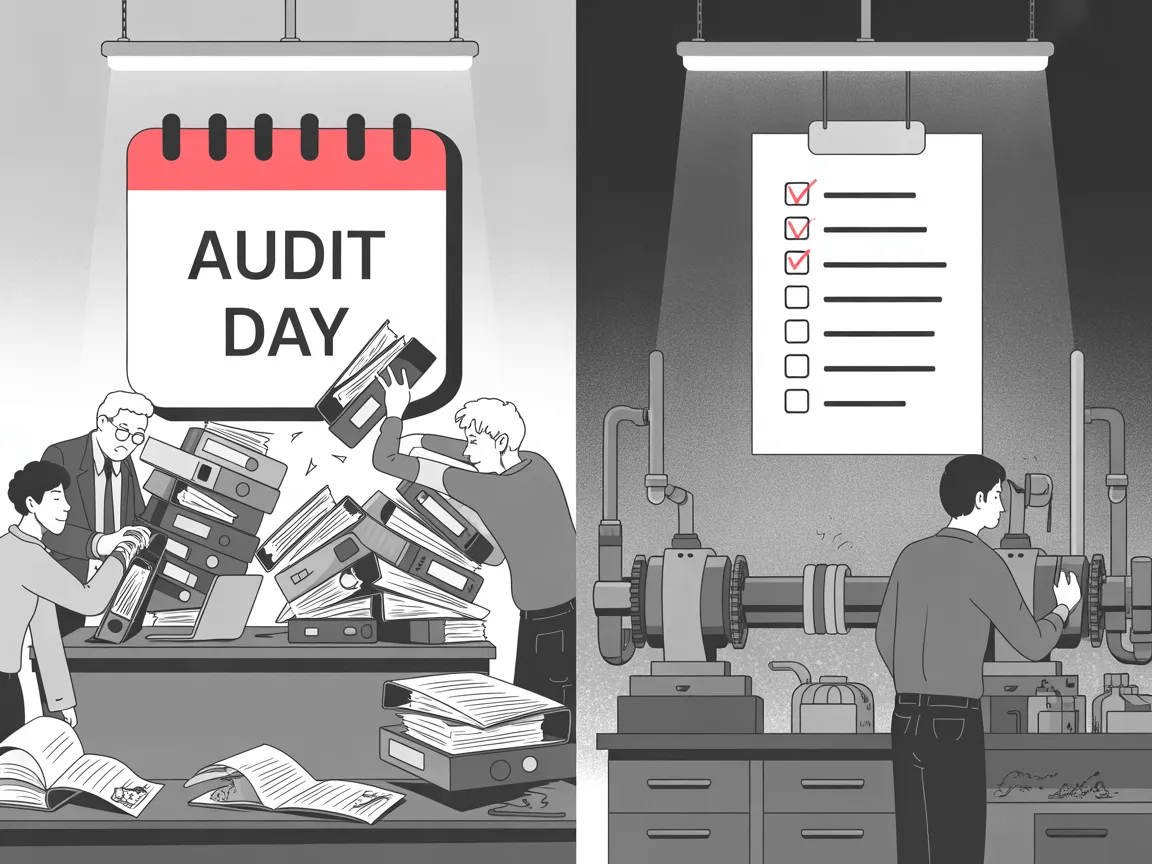
Plant A: life in audit survival mode
In Plant A, the scene is almost theatrical.
For the past two weeks, files have come out of cupboards. Records are being filled in after the fact. Supervisors are chasing signatures. People are being coached on what to say if the auditor asks a question. The consultant has promised: "Don't worry, I'll handle the audit."
Everyone knows the drill. Stress is high, tempers are short, and the goal is simple: get through the audit.
None of this happens during the rest of the year. The system wakes up only when the auditor is coming.
The truth is simple: their system lives in a frame and a folder, not on the shop floor. Nobody believes in it, so nobody uses it, except in audit week.
And auditors can usually tell. For a while, Plant A scraped through with rehearsed answers and polished files. Then one surveillance audit, the auditor followed the corrective actions. Months of open actions. Repeat findings closed on paper but not on the floor. A layered process audit schedule that existed only as a plan.
The result was a major nonconformity, a tight deadline to close it, and a customer who started asking harder questions. Suddenly the plant that printed "IATF certified" on its brochure was making urgent calls, trying to fix in weeks what should have been built over years.
Plant B: the power of daily clarity
Now step into Plant B, a few kilometres away.
Here, audit day looks like any other Tuesday. No backdated records. No rehearsals. No nervous staff.
It isn't luck. It's how they run the floor. Supervisors use the same checklists every day, not because an auditor will ask, but because it makes their shift easier. Operators record checks in real time because it helps them catch problems before they grow. Layered process audits happen on schedule and the findings get acted on. Internal audits are treated as a chance to learn, not a performance to stage.
So when the auditor arrives, nothing needs to be hidden or polished. The evidence is already there, part of the daily rhythm.
Performance vs practice
Both plants have the same certificate. The outcomes could not be more different.
- Plant A treats the system as a yearly performance. Records come alive only for the audit. The result: stress, consultant fees, repeat findings, and no real improvement.
- Plant B treats the system as daily practice. It's simple, fitted to how they work, and built into routines. Problems surface early, improvements stick, and the customer notices. The result: stability, credibility and growth, with no annual drama.
This is the hard truth: passing an audit is not the same as running a system. A certificate can be earned with good preparation. A working process can't be faked for long.
Which plant are you?
One path turns IATF into an annual drama: dusting files, rehearsing answers, and hoping the auditor doesn't dig too deep. The other path makes the system almost invisible, because it's simply how the plant works. Machines run smoother, people are less stressed, and the customer trusts what you ship.
A quick way to find out where you stand: look at how much changes in the two weeks before an audit. The more that changes, the more of your system lives on paper.
Which plant do you want to be: the one that performs once a year, or the one that improves every day?